Upload a List of Urls to No Index
Keeping an middle onGoogle Search Console is a must when you ain or run a website of any kind, and any errors encountered while doing so can be frustrating, peculiarly if you are non quite sure what they mean or how to fix them. for example, if a Google notification states 'submitted URL marked 'noindex', what practice they mean? What are the implications for your website (and its SEO) and only how do you fix a 'submitted URL marked 'noindex' error. These issues and more are what we are going to take a closer look at now.
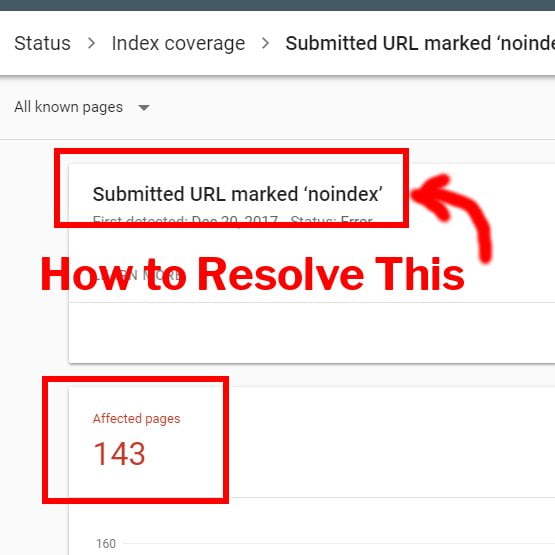
WHAT DOES THE SUBMITTED URL MARKED 'NOINDEX' Mistake Mean?
In a nutshell, the page in question – the fault will exist attached to page link is not indexed, equally indicated by the give-and-take "fault."
In other words, Google attempted but failed to alphabetize your page. Why is that? On the one hand, the term "submitted URL" denotes that the page has been submitted to Google for indexing. This implies that the URL has been added to a sitemap that Googlebots have attempted to follow during a clamber of your site.
On the other hand, something on the page is preventing Googlebot from indexing it. A noindex meta tag in the page'south source code or an Ten-Robots-Tag HTTP header might have been used.
As a result, the page will not announced in the results of a search. Confused, the Googlebot tasked with post-obit a sitemap that and so throws upward a roadblock triggers this error alert in Google Console.

HOW TO Gear up THE 'SUBMITTED URL MARKED NOINDEX' ERROR
How you go almost fixing this error very much depends on what y'all actually want the Googlebot to practice.
If you do want it to alphabetize the page, and so y'all have to remove whatever is preventing it from crawling the folio, so it can do so. With that in listen here'due south a closer look at the process to gear up the 'submitted URL marked noindex' error if and when it shows up in your Google Console.
VERIFY LIVE URLS
Examine the list of pages from the report to see if they are still listed in the XML sitemap and whether they are marked as noindex. To make sure you lot're looking at the well-nigh recent version of your site equally you follow links from the Google Panel written report to your site, articulate the cache before you lot do and so.
You can practise this manually if there are simply a few URLs, simply clicking on each link in the study. If there are lots of URLS included you might want to make apply of a link checking utility, which will do much of the work for y'all and present you lot with a list of 'problem' links.
THE FIRST Set up
Equally a result of the verification procedure we only described you'll end up with two possible outcomes.
Pages that have been deliberately tagged with the noindex aspect are incorrectly included in the XML sitemap: yous'll need to remove these pages from the XML sitemap.
Pages that are incorrectly marked noindex and included in the XML sitemap should accept their indexability condition updated, and you should be practiced to go.
WHY WOULD YOU Mark PAGES 'NOINDEX' IN THE FIRST PLACE?
Some of your site's pages have a purpose, but it isn't to meliorate your search engine rankings or drive traffic to your site. These pages are required to be accessible on your website, either as a glue for other pages or considering of regulations that govern your website in the jurisdiction it operates in.
Which might these pages exist? Here are some examples:
If you're the just person who writes for your blog, your author pages are almost certainly identical to your web log's homepage. This is irrelevant to Google and could even be considered duplicate content. Yous tin can choose to plough off the author archive entirely to avoid indistinguishable content or you can noindex it if you want to keep information technology on your site simply out of the search results.
Sure TYPES OF (CUSTOM) POSTS
A plugin or a web developer might create a custom post blazon that you don't want indexed. You can either delete them or noindex them if they serve a purpose – which is often the case for east-commerce sites.
THANKYOU PAGES
Usually a thankyou page'south sole purpose is to limited gratitude to your customer, newsletter subscriber, or first-fourth dimension commenter. These are ordinarily thin content pages with upsell and social share options, but no value for someone looking for information on Google. As a effect, those pages should not appear in the search results.
LOGIN AND ADMIN PAGES
The bulk of login pages should not be found in Google. Add a noindex to yours to keep it out of the index. The login pages that serve a community are an exception. If you are not sure if you should noindex a login page or not, merely ask yourself if you, as a browser/customer/consumer, would Google one of your login pages. If non, it's safe to assume that Google should not be indexing these login pages.
HOW TO REMOVE/ADD A NOINDEX VALUE
Different CMS platforms offering unlike ways to add or remove a noindex tag, and some have plugins that make it easier. WordPress, for example, tin exist used with several plugins – the virtually prominentbeing Yoast – that will walk y'all through doing this as a part of plugin set up, and some WordPress themes have an pick in the limerick of interface of pages and posts that you can simply check to mark your work noindex.
If y'all practise need or want to await for the meta tag in the page's source code, wait for something that looks like this: meta name="robots" content="noindex"> meta proper name="robots" content="noindex"> You should as well look for a noindex, noarchive, or other negative header in your HTTP headers.
REMOVING A URL FROM A SITEMAP
If you lot did mean to marker folio noindex, but did not mean to include information technology in anXML sitemap y'all'll need to generate a new sitemap that does non include that URL. How you do that volition depend on how your sitemap is generated. Most websites make utilize of a plugin or special utility of some kind. Go through its settings to ensure that the pages it is going to submit are actually the ones you want in that location.
HOW TO FIX THE 'SUBMITTED URL MARKED NOINDEX' ERROR WITH GOOGLE
Once yous take fixed the error, you lot'll need to tell Google near it, in order to trigger a recrawl by their Googlebot. To do this you'll need to use the URL inspection tool in Google Search Panel and so that Google tin check your work. If yous have never used this tool before, this video from the company themselves does an splendid task of explaining how.
FAQS
How to set a submitted url marked 'noindex'?
If you discover asubmitted URL marked 'noindex'check to meet if the folio is individual, countersign protected, or only available for certain members.
What does the submitted URL marked noindex mean?
If you noticed agoogle search console noindexerror then Google has decided that your page tin can not be indexed and taken public.
How do I fix a submitted URL marked noindex in WordPress?
If yoururl is marked noindex, try clearing your cache and make sure your WordPress is updated. So verify if your pages are listed in the XML sitemap.
browningmanst1958.blogspot.com
Source: https://pearllemonweb.com/fix-submitted-url-marked-noindex/
0 Response to "Upload a List of Urls to No Index"
Post a Comment